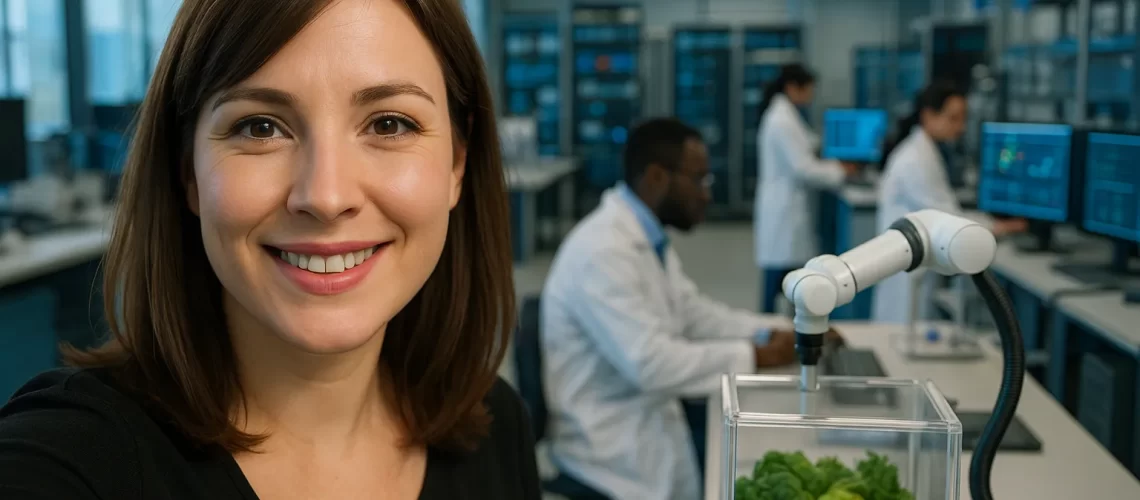

AI-Powered Olfactory Systems: Revolutionizing Industry Through Smell Intelligence
The article delves into the groundbreaking integration of artificial intelligence and olfactory systems, showcasing how this technology is transforming industries. From improving food safety and healthcare diagnostics to driving sustainability in environmental monitoring, AI-powered odor sensing offers unprecedented opportunities for innovation and efficiency. By mimicking and enhancing the human sense of smell, these systems are ushering in a new era of precision and adaptability, revolutionizing practices across various fields.
The Science Behind AI-Powered Smell Intelligence
AI-powered smell intelligence is a cutting-edge technology that replicates and enhances the human sense of smell using artificial means. It relies on advanced sensors, often called electronic noses, which are capable of detecting complex odor patterns. These sensors collect data that is processed by machine learning algorithms. The algorithms analyze the chemical signatures of various odors, mimicking how the human brain interprets smell signals from olfactory receptors.
At the heart of this innovation is the fusion of hardware and software. The electronic noses are equipped with arrays of chemical sensors that react to volatile organic compounds emitted by substances. These reactions create patterns that machine learning models can analyze to classify and interpret specific odors. This groundbreaking integration allows machines to identify smells across diverse environments, from industrial plants to hospitals, with accuracy that rivals human olfaction.
Training these AI systems requires vast datasets of odor samples paired with their chemical compositions and real-world contexts. By learning from these datasets, machine learning models can identify odor patterns with remarkable precision. This training process is akin to how humans develop their sense of smell over time by linking specific scents to corresponding objects, substances, or scenarios, making electronic noses highly adaptable across industries.
What makes AI-powered olfactory systems revolutionary is their ability to detect odors at molecular levels far beyond human capability. While humans might find subtle or overlapping smells difficult to categorize, these systems excel. They break down odor profiles into quantifiable data points, providing sharp insights about chemical compositions. This ability to pinpoint even faint or mixed scents opens up transformative possibilities in food safety, healthcare, and environmental protection.
In understanding how these systems work, it’s essential to note their scalability and flexibility. Developers can tailor sensors and algorithms to meet specific goals, such as detecting hazardous gases or assessing the freshness of food products. The versatility of these systems lies in their ability to evolve and learn continuously. Just as humans improve their sense of smell through exposure, these AI systems improve with additional data and experience.
Transformative Applications Across Industries
The integration of AI-powered olfactory systems is paving the way for groundbreaking transformations in various industries. Food safety, for instance, has greatly benefited from these advancements. By detecting harmful pathogens or spoilage at a molecular level, electronic noses enable faster and more accurate quality control processes. These systems also help ensure that food products meet regulatory standards, minimizing health risks and reducing waste, which bolsters efficiency and sustainability in the food supply chain.
In healthcare, AI-powered olfactory technologies are proving to be revolutionary, particularly in diagnostics. They can identify biomarkers in human breath that signal the presence of diseases, such as cancer or respiratory conditions. These non-invasive methods provide rapid and accurate diagnoses, often at earlier stages than traditional techniques. Such capabilities transform patient care by enabling timely interventions and reducing the need for more invasive diagnostic procedures, improving both treatment outcomes and patient experiences.
Environmental monitoring is another field experiencing a major shift thanks to these systems. AI-driven olfactory technologies can detect pollutants and hazardous gases with unparalleled precision, even in trace amounts. This allows for real-time monitoring of air quality and ensures safety in industrial settings. By identifying problem areas early, they support efforts to mitigate pollution, promoting cleaner environments and addressing pressing global concerns, such as climate change and public health impacts from air pollution.
The applications of electronic noses extend to consumer industries as well, particularly in enhancing product experiences. Perfume and fragrance companies leverage these technologies to analyze scent profiles and create appealing blends tailored to market preferences. Similarly, the wine and beverage industry benefits from improved quality assessments, ensuring consistent flavor profiles. These tailored solutions offer businesses the ability to satisfy evolving consumer demands while maintaining high standards of quality and innovation, enhancing brand loyalty.
Beyond traditional industries, research and development have unlocked even more creative applications for AI-powered olfactory systems. For example, these technologies are being used in forensic science to analyze chemical traces at crime scenes. Their ability to quantify subtle compounds aids investigations by providing evidence that might otherwise go unnoticed. As such innovations gain traction, the versatility and adaptability of electronic noses continue to reveal new possibilities across diverse and unexpected fields.
By detecting harmful pathogens or spoilage at a molecular level, electronic noses enable faster and more accurate quality control processes.
The Future of Innovation Through AI and Olfactory Systems
The future of AI-powered olfactory systems holds immense potential for reshaping industries and humanity's interaction with odors. As technology continues to advance, electronic noses are expected to become even more sophisticated, enabling them to analyze increasingly complex chemical compositions. This precision could unlock groundbreaking discoveries in medicine, environmental science, and beyond, addressing challenges at both local and global scales. These improvements promise to deepen the integration of artificial intelligence into everyday life.
In healthcare, the next wave of innovation may involve integrating AI olfactory systems with wearable devices, enabling real-time monitoring of an individual's health. Detecting disease biomarkers through sweat, breath, or other secretions could facilitate continuous, non-invasive diagnostics. Patients could receive instant health alerts, enabling preventive care and early intervention. This type of precision medicine could empower individuals to take control of their wellness while reducing the strain on overburdened healthcare systems worldwide.
In environmental monitoring, the future might see AI-powered olfactory technologies deployed on a grand scale. Networks of electronic noses could work together to provide a detailed map of air quality across entire cities or industrial zones. These systems could play an essential role in combating climate change, helping governments implement smarter policies for pollution reduction. By identifying hazardous regions in real-time, they could help safeguard public health and promote a cleaner planet for future generations.
The commercial landscape is also set to evolve as businesses embrace these systems for personalized consumer experiences. Imagine clothing that emits tailored scents or cars with odor-detection systems that adjust cabin conditions for enhanced comfort. Such innovations could enhance brand identity while catering to individual preferences. As AI-driven olfactory systems continue to push the boundaries of their applications, they have the potential to redefine what personalized service means across industries.
Looking ahead, collaboration between researchers, policymakers, and industry leaders will be key to unlocking the full potential of AI-powered olfaction. Establishing ethical guidelines and ensuring data security will help foster trust in these systems while maximizing their benefits. Whether through improving health outcomes, protecting the environment, or enhancing daily experiences, this technology’s future is bound to be transformative. The next decade promises an exciting era of innovation driven by these intelligent systems.
AI is probably the most important thing humanity has ever worked on. I think of it as something more profound than electricity or fire.
Sundar Pichai (2018 January 22)