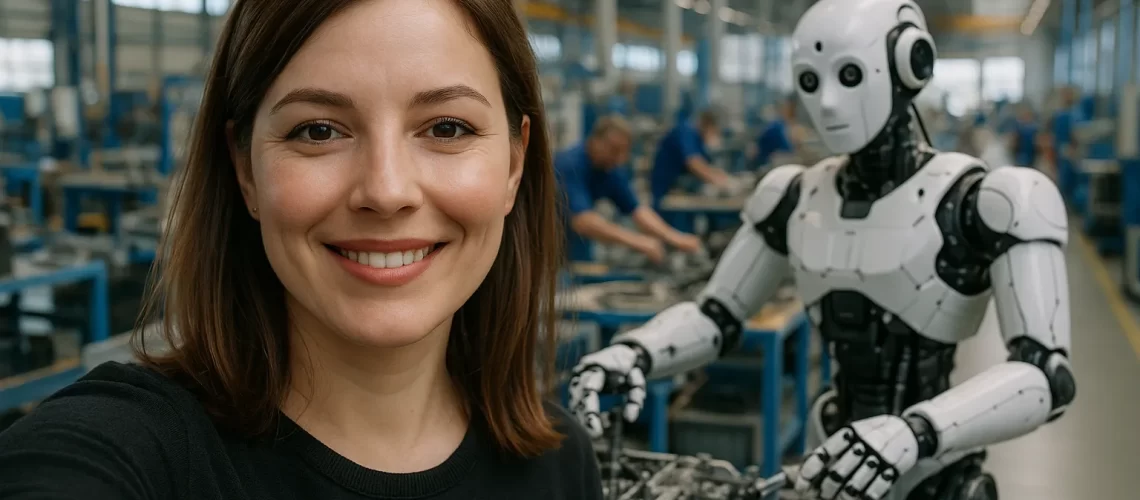

Beyond Vision and Touch: How AI-Driven Gesture Understanding is Revolutionizing Industrial Humanoid Robots
AI-powered gesture recognition is transforming industrial humanoid robots by enabling them to interpret complex human actions and movements with unprecedented precision. This innovation fosters seamless collaboration between humans and robots, enhances automation in intricate assembly processes, and marks a significant leap forward in industrial automation. Explore how advanced AI-driven gesture intelligence is paving the way for smarter, more efficient, and safer industrial environments in this engaging article.
Decoding Human Gestures: The AI Behind Understanding Movements
Understanding human gestures through AI involves decoding subtle movements, expressions, and body language. These gestures often carry rich contextual meaning, enabling industrial humanoid robots to interpret complex commands. With advanced algorithms like deep learning, robots learn to differentiate and assign significance to various human movements. This capability not only enhances how robots respond but also makes communication more intuitive, bridging the gap between human intention and machine understanding. AI effectively transforms movements into actionable insights.
To achieve this, gesture recognition systems rely on sophisticated sensors and cameras that capture intricate human motion. These data streams are processed in real-time by AI models trained to recognize patterns in body positions and dynamic gestures. The translation of raw data into interpretable human actions is crucial. By mimicking human behavior analysis, these systems help robots grasp both explicit cues, like pointing, and nuanced signals, like subtle hand flicks, enhancing precision and reliability.
One of the pivotal breakthroughs in AI-driven gesture recognition is its ability to adapt and learn continuously. As robots encounter a variety of users with unique tendencies, the AI’s pattern recognition capabilities evolve, becoming more accurate over time. This adaptive learning minimizes errors in interpreting unfamiliar or ambiguous movements. The result is a more personalized and dynamic interaction where robots understand not just pre-programmed motions but also unexpected, real-world gestures with remarkable accuracy.
Central to this innovation is the synergy between AI models and human behavior, allowing robots to predict intent based on context. For example, a robot observing a worker reaching toward a tool can anticipate their need and assist proactively. By blending predictive analytics with gesture recognition, AI enhances not only efficiency but also safety. This foresight-driven approach ensures robots respond appropriately, reducing miscommunication and creating seamless integration in diverse industrial settings.
Seamless Collaboration: Redefining Interactions Between Humans and Robots
In industrial settings, seamless collaboration between humans and robots has become a cornerstone of efficiency. AI-driven gesture understanding enables robots to interact with humans in ways that feel natural and intuitive. By accurately interpreting human movements, these robots can anticipate needs, respond to commands instantly, and adapt to diverse work environments. This smooth interaction fosters trust, making robots not just tools but collaborative partners in achieving shared goals.
A key component of this collaboration is contextual understanding, where robots go beyond simple responses to decode human intent. For example, when an assembly worker gestures toward a specific part, the robot can identify the task required without explicit verbal input. This capacity to interpret nonverbal cues leads to improved workflows and reduces friction in human-machine communication, closing the gap between human expectations and robotic actions.
AI-powered robots are also revolutionizing teamwork through their ability to adapt in real-time. They continuously learn from human behaviors, fine-tuning their responses to match unique working styles. This adaptability means industrial robots can cater to individual operators, offering dynamic assistance that feels personalized. The result is a symbiotic relationship where humans and robots work harmoniously, blending strengths to achieve heightened productivity and precision in intricate processes.
Safety is another major benefit brought by this seamless collaboration. By predicting human movements and understanding subtle gestures, robots can act proactively to prevent accidents. For instance, if a robot senses a potential hazard through a worker’s body language, it can respond by pausing or adjusting its actions. This predictive capability reduces risks, creating a safer, more efficient industrial environment where humans and robots thrive together.
The human vision is the ultimate model for artificial intelligence systems to understand and interact with the world.
Fei-Fei Li (2017 November 15)
AI-driven gesture understanding enables robots to interact with humans in ways that feel natural and intuitive.
Industrial Automation 2.0: Smarter, Safer, and More Efficient Workspaces
Industrial automation is entering a new era, where smarter and more efficient workspaces are defined by AI-driven gesture recognition technologies. These systems empower robots to seamlessly integrate into human-dominated environments, performing tasks with precision and speed. By understanding human gestures and intent, robots can anticipate needs and proactively assist in complex operations. The result is not only improved productivity but also a more synchronized partnership between humans and machines, revolutionizing traditional workflows.
In these advanced industrial environments, safety is significantly enhanced through AI-powered automation. By predicting human actions and detecting potential hazards based on gestures or body language, robots can respond intelligently to prevent accidents. This predictive approach fosters trust and reduces the risks commonly associated with human-robot collaboration. As automation evolves, this prioritization of safety ensures that workplace accidents are minimized and that employees operate in a more secure setting.
Efficiency is another cornerstone of this technological evolution, with robots optimizing workflows through real-time adaptability. AI continuously refines robots’ responses to human behaviors, creating dynamic systems capable of evolving with changing needs. This adaptability is crucial in intricate industrial processes, where precision is paramount. By reducing errors and delays, robots equipped with gesture recognition technologies not only save time but also ensure consistency in production quality, redefining operational standards across industries.
The integration of AI-driven gesture understanding also contributes to more intuitive and harmonious workspaces. As robots decode nonverbal cues and human intent, communication barriers diminish, allowing for smoother collaboration. This intuitive interaction transforms robots from tools into cooperative partners, fostering a sense of teamwork. By bridging the gap between human and machine, these innovations create an environment where collaboration becomes effortless, laying the foundation for the next generation of industrial innovation.
Ultimately, industrial automation 2.0 represents a fusion of intelligence, safety, and efficiency. AI-enabled gestures not only enhance performance but also elevate human-robot interaction to unprecedented levels. With smarter systems adapting to unique demands and maintaining secure environments, industries are seeing groundbreaking advancements. This evolution underscores how technology can amplify human potential while ensuring robots remain reliable and synchronized collaborators in reshaping the future of work.