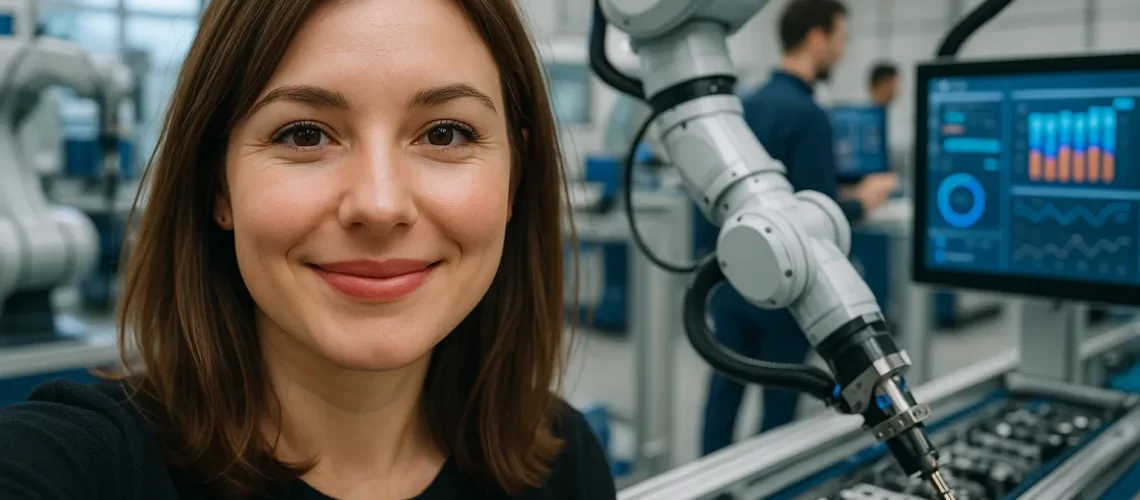

AI Touch: Revolutionizing Industries Through Sensorial Intelligence
This article explores the cutting-edge potential of AI-driven tactile sensing technologies, showcasing how they are transforming industries such as robotics, healthcare, and manufacturing. By integrating artificial intelligence into touch sensors, these innovations are improving precision, safety, and efficiency across various applications. The piece dives into real-world examples, the technology's impact on modern industrial practices, and the exciting future possibilities of AI-enhanced sensory systems in creating smarter and more responsive machines.
The Intersection of AI and Tactile Technology: How Touch Powers Intelligent Systems
Artificial intelligence is revolutionizing how machines interpret and interact with the physical world, and one of the most profound breakthroughs lies in its integration with tactile technology. By mimicking human touch with sensors capable of detecting pressure, texture, and temperature, AI-powered systems are becoming increasingly adept at understanding intricate physical dynamics. These advancements are driving an era where machines not only see and hear but also feel, allowing for smarter and more intuitive interactions.
The fusion of AI and tactile sensing represents a critical evolution in creating systems that can adapt to their environments. Unlike traditional sensors, these technologies leverage machine learning to process input from multiple touch sensors simultaneously, generating data-driven insights in real time. This ability enables remarkable precision and responsiveness that is crucial in complex tasks such as robotic surgery, material handling, and even delicate assembly in high-demand manufacturing.
These AI-enhanced tactile systems are not only advancing machine capabilities but also bridging gaps in human-machine collaboration. For instance, the sophisticated feedback loop generated by artificial intelligence and sensor data enables machines to replicate human-like touch sensitivity. This allows robots and prosthetics to handle objects or perform tasks with a nuanced precision that was previously unattainable, pushing the limits of what can be achieved in rehabilitation, caregiving, and industrial operations.
Moreover, AI-powered tactile technology is laying the groundwork for a safer and more efficient future in automation. By equipping machines with the sensory tools needed to anticipate or react to physical stimuli, safety risks in dynamic environments are significantly reduced. This creates intelligent systems that are not only highly efficient but also capable of operating seamlessly alongside humans. As this technology matures, its implications for everyday life and industrial advancement become increasingly promising.
Transformative Applications: AI-Driven Touch Across Key Industries
AI-driven touch technology is profoundly transforming industries by enhancing precision, efficiency, and adaptability in diverse applications. In robotics, for example, tactile sensing enables machines to perform complex and delicate tasks like surgical procedures or assembling microcomponents with near-human accuracy. This ability to simulate human touch creates opportunities for innovation, redefining what machines can achieve in industries where precision and responsiveness are absolutely critical for success.
In healthcare, AI-powered tactile systems are revolutionizing patient care and medical procedures. Robotic surgery tools now benefit from advanced touch sensitivity, allowing surgeons to operate with unparalleled accuracy and minimizing risks. Similarly, smart prosthetics achieve a more natural feeling for users by utilizing AI-enhanced sensory feedback. These developments not only improve medical outcomes but also enhance patient quality of life, offering solutions that were previously unimaginable in traditional healthcare.
The manufacturing sector is also reaping significant benefits from AI-driven tactile technology. Automated systems equipped with touch sensors can detect material variations, anticipate defects, and handle fragile components safely. By incorporating AI, these machines optimize performance and reduce errors, leading to faster production cycles and lower costs. Such capabilities make it easier for industries to meet the growing demand for high-quality, reliably produced products in competitive global markets.
Beyond industry, AI-powered tactile systems are proving invaluable in human-robot collaboration, especially in caregiving and rehabilitation. Robots designed to assist elderly or disabled people now possess the touch sensitivity needed to handle objects with care and respond intuitively to user needs. This fosters trust and improves the effectiveness of these systems in providing personalized support, demonstrating how AI-driven touch technology is enhancing lives and closing the gap between humans and machines.
In robotics, for example, tactile sensing enables machines to perform complex and delicate tasks like surgical procedures or assembling microcomponents with near-human accuracy.
The Road Ahead: Innovations and Challenges in AI-Enhanced Sensory Systems
The road ahead for AI-enhanced sensory systems promises remarkable progress, but not without its challenges. Innovations in tactile technologies continue to push boundaries, with researchers developing sensors that are even more sensitive, adaptive, and scalable. These advancements pave the way for machines to interpret touch in ways that rival human sensitivity. However, achieving consistent reliability in these systems, particularly in dynamic environments, remains a significant hurdle, requiring ongoing investment in both hardware and software solutions.
One exciting prospect is the potential of integrating AI-powered tactile systems with emerging technologies like augmented reality and the Internet of Things (IoT). This would create deeply interconnected environments where machines can gather and respond to physical stimuli on an unprecedented level. The challenge lies in harmonizing these technologies to operate seamlessly, as interoperability issues and data processing requirements can slow down development. Overcoming these obstacles will be key to unlocking their full potential.
Ethical considerations also play a pivotal role in shaping the future of tactile AI. As these systems become more advanced, concerns surrounding data privacy, security, and human autonomy grow increasingly crucial. For example, in healthcare, AI-powered touch systems must handle sensitive patient information responsibly, ensuring safety while respecting privacy. Developers must prioritize ethical frameworks and transparent practices to ensure these technologies benefit society without compromising trust or exacerbating inequalities in access.
Despite these challenges, the potential for AI-enhanced touch systems to improve lives and industries remains incredibly promising. Breakthroughs in machine learning algorithms and sensor design are enabling innovations that were once purely theoretical. From robots capable of delicate surgical procedures to caregiving machines offering human-like touch, future applications inspire significant optimism. Continued collaboration among researchers, developers, and policymakers is crucial for overcoming barriers and delivering on the enormous promise of this transformative technology.
AI is probably the most important thing humanity has ever worked on. I think of it as something more profound than electricity or fire.
Sundar Pichai (2018 January 22)